
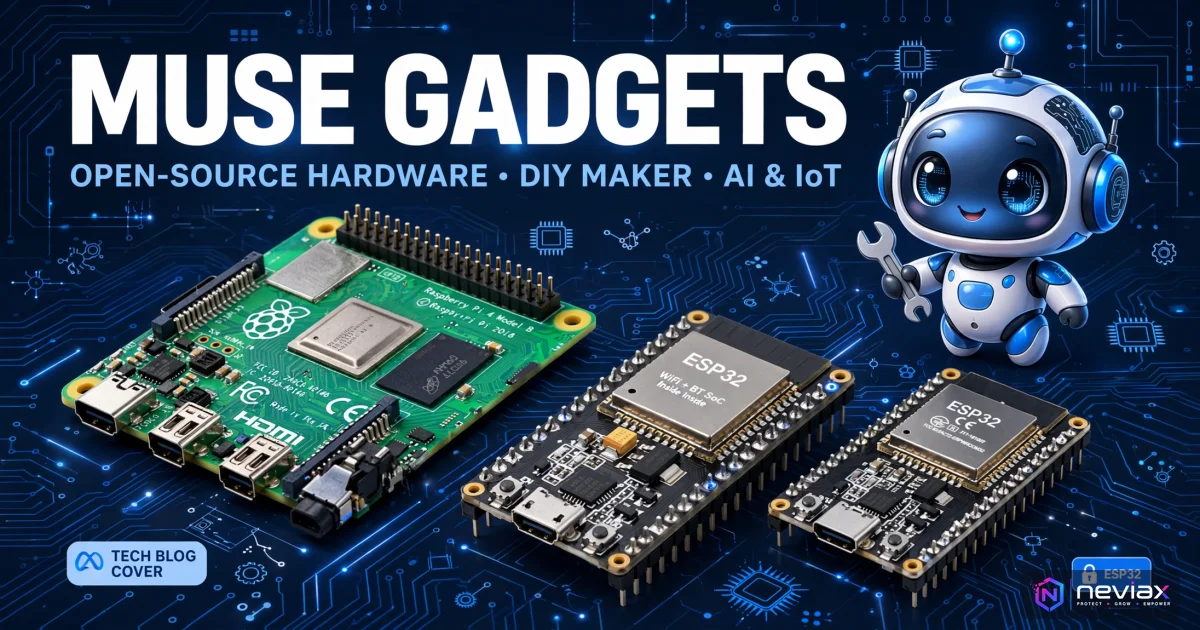
Meta Launches Muse Gadgets: Build Your Own AI Hardware with Open-Source Tools
What Are Muse Gadgets?
Meta just made a bold move. On October 2, 2026, the company announced Muse Gadgets, an open-source project that lets developers and hobbyists connect the Muse AI agent to custom-built hardware.
This is not just another software update. Meta released open-source ESP32 firmware and a Linux SDK, meaning anyone can now build physical devices powered by Muse. Think of it as giving the maker community the keys to Meta's personal AI agent.
Facebook Content Monetization Waitlist Criteria 2026: How to Unlock with 300K Views
What You Can Build
Meta suggested several starter ideas:
Smart reminder displays. Add Muse to a color E Ink display for glanceable reminders and calendar updates on your desk.
TV integration. Use an HDMI stick to bring Muse to your television for voice-controlled smart home management.

Custom touchscreen devices. Build a small touchscreen gadget similar to the Muse Charm, Meta's own reference device.
The system runs on readily available hardware like Raspberry Pi computers and ESP32 boards. You can connect Muse to displays, buttons, sensors, and other components through your own setups.
Meet Muse Home Link
To prove the concept, Meta built its own reference device called Muse Home Link. According to Nat Friedman, head of product at Meta's Superintelligence Labs, this USB-C-powered device connects Muse to your home network and lets it communicate with smart devices like speakers and smart TVs.
Meta produced 5,000 Home Link units and is offering them free to Muse subscribers while supplies last, with shipments expected within weeks.
Why This Matters
This move expands Muse far beyond a phone app. By open-sourcing the hardware layer, Meta is:
Building an ecosystem. Just like Arduino sparked a maker revolution, Muse Gadgets could spark an AI hardware revolution.
Competing differently. While competitors keep their AI locked in proprietary devices, Meta is betting on openness.
Reaching developers. The Discord channel Meta created for Muse Gadgets builders shows they want community-driven innovation.
Muse for Small Business
In the same week, Meta also launched Muse for Small Business, free with usage limits. It connects with Shopify, Dropbox, and Slack, signaling that Meta wants Muse everywhere, from your living room to your office.
Getting Started
If you want to experiment:
Join Meta's Discord channel for Muse Gadgets builders
Grab a Raspberry Pi or ESP32 board
Download the open-source firmware and Linux SDK
Start with a simple project like a smart reminder display
The barrier to entry has never been lower. The question is no longer whether you can build AI hardware, but what you will build.
The Bigger Picture
Meta's Muse strategy is becoming clear. Launch the AI agent, open the hardware, court developers, expand to business. Each piece reinforces the others.
For creators and businesses watching the AI space, Muse Gadgets is a signal. The future of AI is not just in the cloud. It is on your desk, in your living room, and in devices you build yourself.